


In automated production line upgrades or robot integration projects, procuring multi-dimensional force sensors is often a headache. As the party responsible for technology selection or equipment procurement, you may often face this dilemma: the parameters in the supplier's manual look great, with excellent specifications for nonlinearity, hysteresis, and repeatability, but after installation on-site, the data either drifts or cannot withstand interference.
After several trial and error experiences, we have identified three "hidden indicators" that must be closely monitored, as they often determine whether a sensor can be truly used effectively.
1. Don't just look at "accuracy," look at "temperature drift compensation."
Many sensors perform perfectly in a constant temperature environment in the laboratory, but once they are in the factory workshop, as the equipment heats up and the temperature difference between day and night changes, the readings begin to slowly increase.
This is called zero-point drift.
When selecting a model, don't just look at the tempting 0.1%F.S accuracy; be sure to ask clearly: "How much will the error increase for every 10°C change in temperature?"
In industrial settings, if the temperature drift cannot be kept below 0.5%F.S/10℃ and strict creep compensation is required, then the sensor will most likely not survive a summer.
2. Don't just look at the "range," look at the "structural stiffness and overload."
Sometimes you need to measure a very large force, so you choose a sensor with a very large range. But after installing it, you find that the data fluctuates wildly with the slightest vibration of the device, and it can even damage the sensor.
There are two pitfalls here:
Insufficient stiffness: The sensor is too soft, and its resonant frequency is close to the vibration frequency of the equipment, resulting in signal distortion.
Lack of overload protection: Impacts are inevitable in industrial environments. Without an overload capacity of 300%F.S or higher, a single misoperation could render a sensor worth tens of thousands of dollars unusable.
Therefore, when selecting a sensor, it is necessary to confirm whether its mechanical structure design can withstand the "rough" operation on site.
3. Don't just look at the "sensors," look at the "signal chain integrity."
The core value of a multi-dimensional force sensor lies in its data. If signal acquisition and transmission cannot keep up, even the best sensor itself is useless.
You need to consider:
Communication interface: Is it a simple analog signal, or does it require RS485/CAN/Ethernet? Is there strong electromagnetic interference in the field?
Decoupling algorithm: If multidimensional force data is not decoupled, the force on the X-axis will be transmitted to the Y-axis, and the resulting data will be meaningless.
Integration difficulty: Can it be directly integrated with existing PLC or robot control systems?
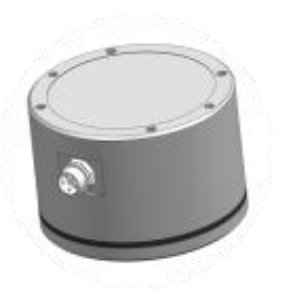
Recently, while evaluating a solution from a company called Zhongke Huigan, we found them to be quite pragmatic. Instead of constantly emphasizing their "cutting-edge technology," they focused on resistance strain gauge temperature drift compensation and industrial-grade protection (IP65). Their six-dimensional force sensor has a built-in acquisition module, directly outputting force values, saving us the trouble of signal conditioning. For users like us who only need stable data and don't want to deal with the underlying algorithms, this turnkey solution is much more appealing.
Conclusion
Choosing a sensor is essentially choosing a partner that can operate stably and reliably in harsh environments over a long period. The parameter table is just the entry ticket; the real test lies in its ability to maintain silent and accurate output even amidst dust, temperature differences, and vibration.