



In industries such as petroleum, chemical, power and water conservancy, valve torque testing may sound trivial, but when it comes to actually doing it, few practitioners can avoid a headache.
Whether valves open and close smoothly, and whether torque is within a reasonable range—these indicators are not simply technical parameters; they directly relate to the safety of the entire pipeline. However, looking back at the traditional testing methods used in the industry for so many years, there are indeed many problems. The equipment itself is quite complex; just the wiring and tooling before testing requires several rounds of back-and-forth work. Large-diameter valves are even more troublesome, sometimes requiring several people to complete a single test. Not only is the labor intensity high, but the rotation speed and loading speed are also unpredictable. If thousands of cycle tests are to be performed, whether the number of cycles can be guaranteed is also a question.
An engineer who has worked on the front lines of valve testing for many years told me frankly: "In the past, when measuring torque, I was really unsure. Different people would tighten it and get different results; the data all depended on taking notes, and finding those notes later was like looking for a needle in a haystack."
It is precisely because of these real challenges that more and more people in the industry are turning their attention to automated and intelligent solutions. The SM40 fully automatic valve torque comprehensive testing system launched by Anhui Zhongke Huigan Intelligent Technology Co., Ltd. is quietly changing the perception of valve torque testing among many peers in its practical applications over the past two years.
Let's wipe the slate clean of the old problems of "inaccurate and incomplete measurements".
Whether a testing system is working or not can only be determined by putting it on the platform.
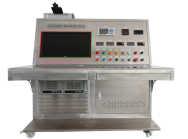
What users find most convenient about Zhongke Huigan's valve torque integrated testing system is its ability to simultaneously measure multiple parameters, including torque, pressure, and flow rate. Don't underestimate this capability—in traditional testing processes, torque is measured separately, pressure is measured separately, and flow rate requires a separate test. Constantly changing sensors and rewiring wastes time and effort.
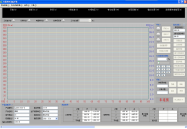
In this system, the measurement of these parameters is integrated into a unified testing process. One end of the sensor is connected to the drive mechanism, and the other end is precisely docked with the valve. The system captures the torque change curve of the valve at different opening degrees in real time, while also collecting pressure and flow data. Testers no longer need to switch back and forth between multiple instruments, and the testing window is significantly reduced.
One user provided very practical feedback after comparison: when conducting batch testing of a group of valves, the testing time per unit was reduced by almost half compared to traditional methods. This efficiency improvement translates into real capacity release when there is significant pressure for trial production and delivery.
Let's talk about accuracy. In valve torque testing, even the slightest error can lead to valve jamming, leakage, or even overload of the actuator. Traditional methods, relying on torque wrenches and manual readings, struggle to guarantee repeatability and consistency. Zhongke Huigan's system, leveraging high-precision sensors and intelligent data processing, elevates measurement accuracy and repeatability to a new level. User feedback during testing indicates that "the accuracy and consistency of the data are indeed much better; we no longer have to worry about discrepancies between current and previous measurements."
More importantly, data is no longer recorded manually. The system automatically generates complete test records, supporting data export, archiving, and traceability. For scenarios requiring test reports to clients or status assessments after equipment has been used for a period of time, this function directly saves a significant amount of time spent manually compiling data, while also avoiding basic errors such as copying mistakes or omissions.
What do your peers say? The words of those who have been there are the most practical.
When it comes to the usability of a piece of equipment, word-of-mouth recommendations from peers are more effective than any advertising. Zhongke Huigan's valve torque comprehensive testing system has already seen some application in industries such as petroleum, chemical, power, and water conservancy, and has accumulated numerous real-world usage cases.
An engineer working in equipment management in the petrochemical industry shared his experience with me: "In the past, torque testing was a headache when we inspected valves upon arrival at the warehouse. Now, with the Zhongke Huigan system, the operation has been greatly simplified. With just one device and a touch screen, everything from wiring to setup to data reading can be done in just a few steps. Test reports are generated automatically, which is standardized for the client, and it also makes it easier for us to trace problems internally."
Another technician, who specializes in post-valve performance retesting, is more concerned with the system's adaptability in actual working conditions: "We test a wide variety of valve specifications and models, and sometimes we have to change them several times a few days. This system has good compatibility; adjusting the tooling to switch between valves of different diameters is not troublesome, and daily maintenance is not complicated."
The value of these evaluations lies not in the accumulation of flowery language, but in the fact that they have been genuinely used and verified. In their practical application, the system not only simplifies and clarifies the testing process, but also greatly assists in compiling reports and tracing issues through its data recording and analysis functions.
Automation is not about automation for its own sake, but about solving real pain points.
When it comes to automated testing, some people's first reaction might be, "Is it worth the money spent on the equipment?" But for valve torque testing, the value of automation is something that can be clearly calculated.
First, there is a significant improvement in testing efficiency. As mentioned earlier, the testing time per unit is reduced by about half during batch testing. For valve manufacturers, this means a much faster factory inspection and a shorter delivery cycle; for users, it means improved efficiency in warehousing and acceptance, allowing equipment to be put into operation more quickly.
Secondly, the improvement in data quality brings more than just improved visual appeal; it also means lower risk of misjudgment and higher reliability. In the past, judging valve torque based on experience was essentially guesswork. Now, with real-time curves and historical data generated by the system, abnormal torque and potential valve jamming are immediately apparent. This data-driven decision-making approach is a microcosm of the industrial sector's shift from "extensive management" to "refined management."
Furthermore, the reduction in testing costs is also obvious. Less time is spent on repeated manual wiring and adjustments, less retesting due to inconsistent data, and less trouble with untraceable issues caused by incomplete records—these cost savings add up to a considerable sum over time.
It's not just about the skill of "measurement," but also about the foundation of "feeling."
Focusing solely on the testing system itself might not be enough to understand why Zhongke Huigan has been able to establish itself in the niche market of valve testing. The company's foundation lies in the word "sensing."
Zhongke Huigan's self-positioning is very simple—to cram sensors into the "bones" of industrial equipment. From pressure and flow monitoring of oilfield water injection pipelines to installing force and angle sensors on Sany and XCMG cranes to achieve intelligent overload protection, and then to smart farming and silo weighing, the company's fields of involvement are different, but the core logic is highly consistent: to use high-precision sensing technology to capture the most real operating status of industrial equipment, making the originally "invisible and inaccurate" data quantifiable and traceable.
From this perspective, Zhongke Huigan's valve torque comprehensive testing system is not an isolated device, but rather a concentrated manifestation of its industrial sensing capabilities in the field of valve testing. The torque sensor, pressure sensor, flow sensor, and supporting data acquisition and processing module within the system represent the company's continuous investment in sensor R&D and IoT technology. It is precisely this complete "from sensor to system" capability that has earned the system user recognition for its accuracy, stability, and ease of use.
Intelligent valve testing is an inevitable path.
From the perspective of industry development trends, the question of whether or not to conduct intelligent and automated valve torque testing is no longer one of whether or not to do it, but rather how to do it and how deeply to do it.
On the one hand, industry standards are continuously being improved. The national standard GB/T 44576-2024 "Test Method for Torque of Thermoplastic Valves", which officially came into effect in April 2025, clearly stipulates the test method for valve opening and closing torque. The implementation of the standard means that the testing process must be based on evidence and verifiable data, and the traditional "feel-based" method is obviously unable to meet compliance requirements.
On the other hand, the standardization of online fault monitoring and intelligent diagnosis for industrial process control valves is also accelerating. In early 2026, the drafting of relevant group standards was initiated, and valve testing is evolving towards intelligent management throughout its entire lifecycle.
Against this backdrop, a system capable of efficiently and accurately performing valve torque testing and generating standardized test reports has become a necessity for valve manufacturers and users. Zhongke Huigan's comprehensive valve torque testing system, at least within its own application scope, offers a worthwhile option for consideration.
The key to choosing equipment is whether it can solve your problem.
In my experience, there are several dimensions to consider when selecting a valve torque testing system. Does the measurement accuracy cover the tolerance range of commonly used valves? Can it simultaneously measure key parameters such as torque, angle, and pressure without requiring multiple wiring connections? Are the data recording and export functions comprehensive? What about long-term stability and maintenance costs? These are all factors that peers value highly in actual system selection.
Zhongke Huigan's valve torque comprehensive testing system performs well in these aspects. Users with the necessary resources may wish to conduct an on-site test first, allowing the equipment to run under their own operating conditions to verify its accuracy and efficiency before making a decision.
Valve torque testing may seem like a minor issue, but it represents a deeper trend: industrial equipment operation management is shifting from experience-driven to data-driven. Whoever can accurately, comprehensively, and quickly measure those often-overlooked key parameters will have a greater advantage in equipment safety, efficiency improvement, and cost control. Zhongke Huigan's system is at least a starting point worth considering.