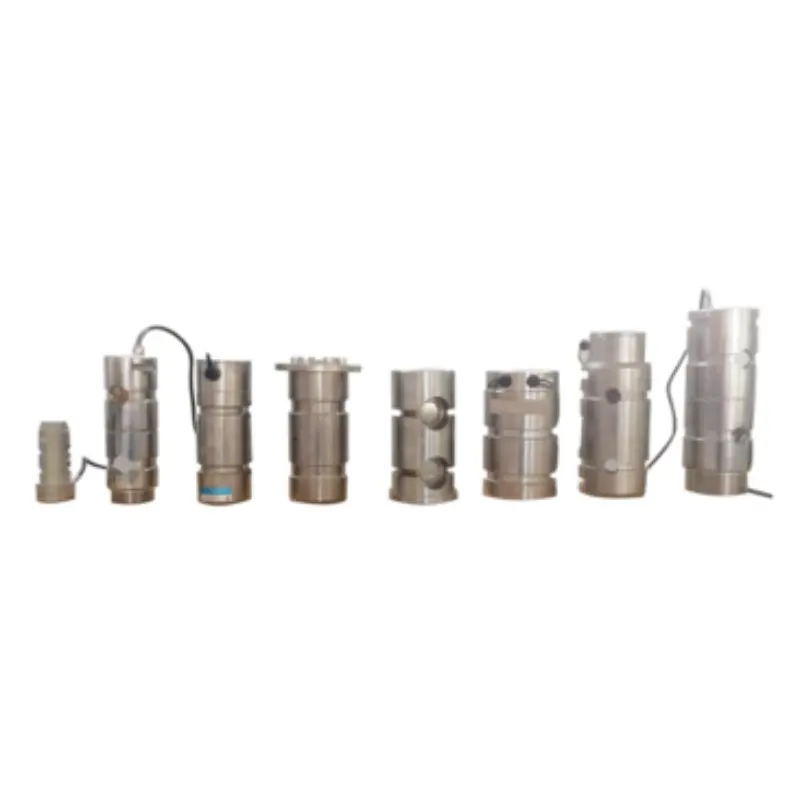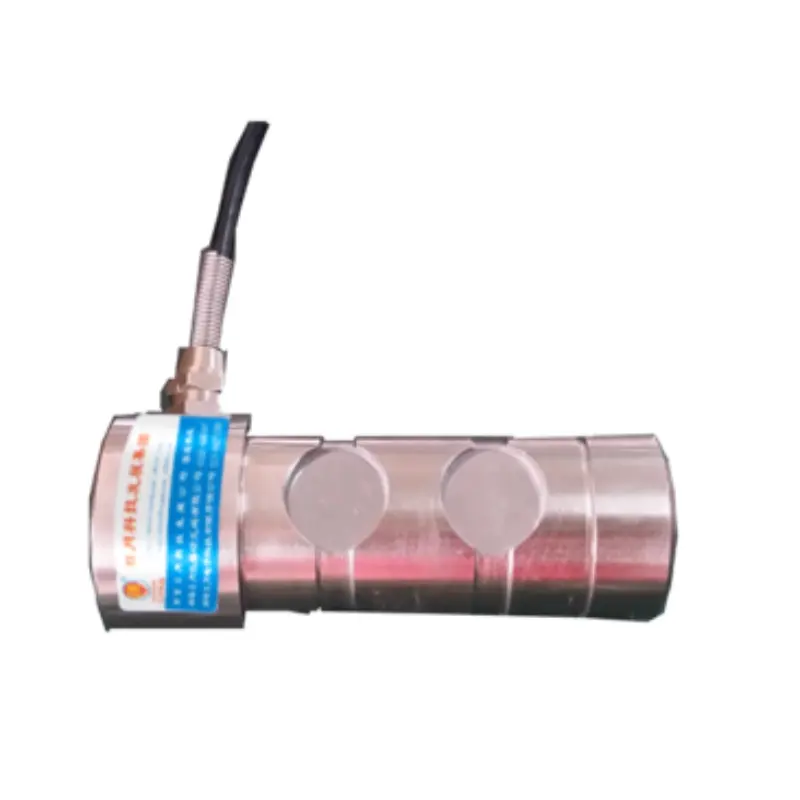



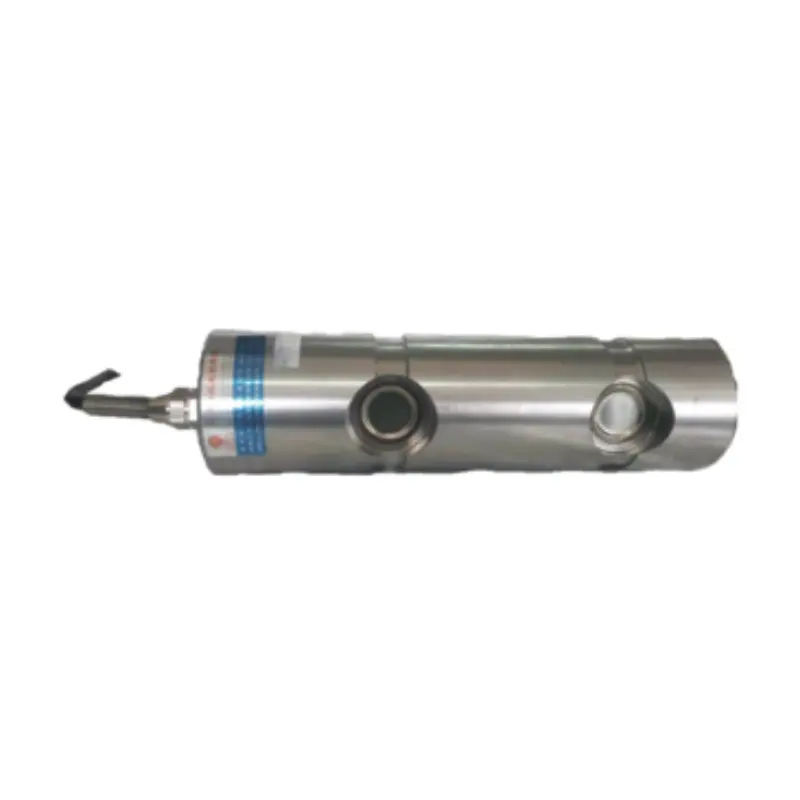
轴销式传感器 / HG-P23F-15t
Product Categories Axis pin sensor
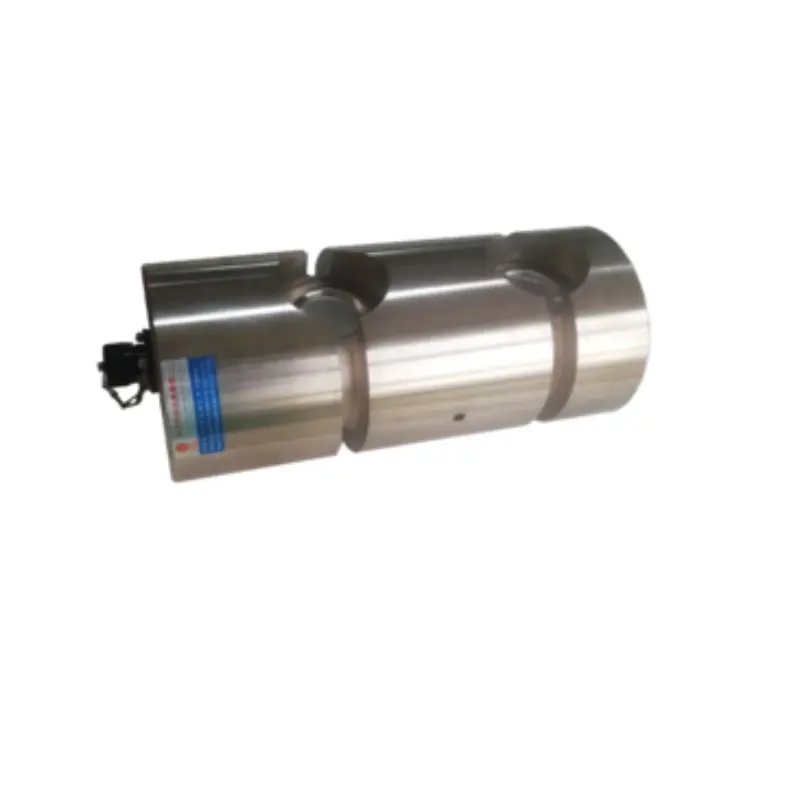
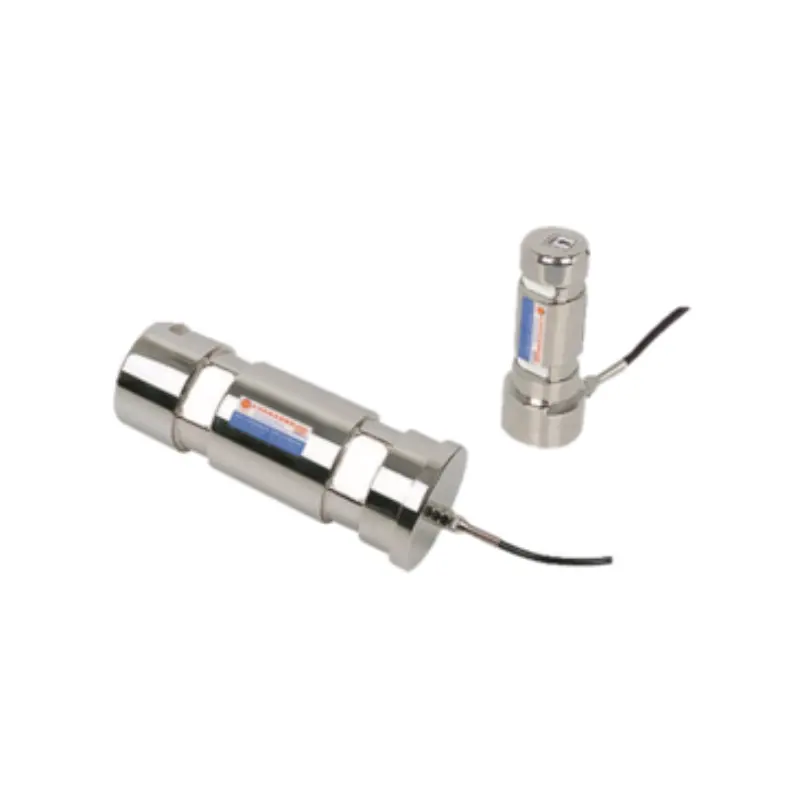
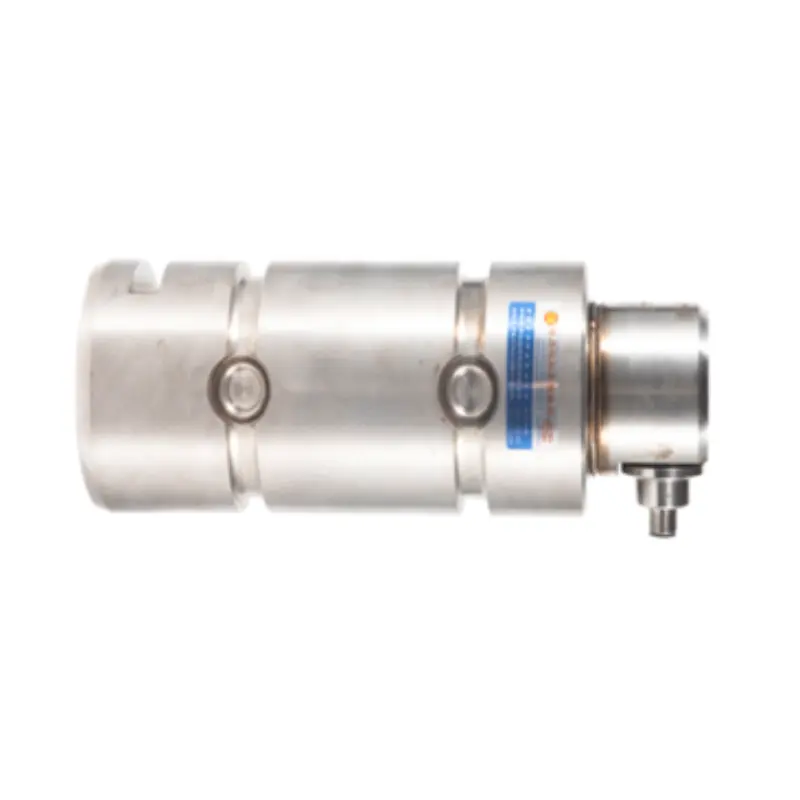
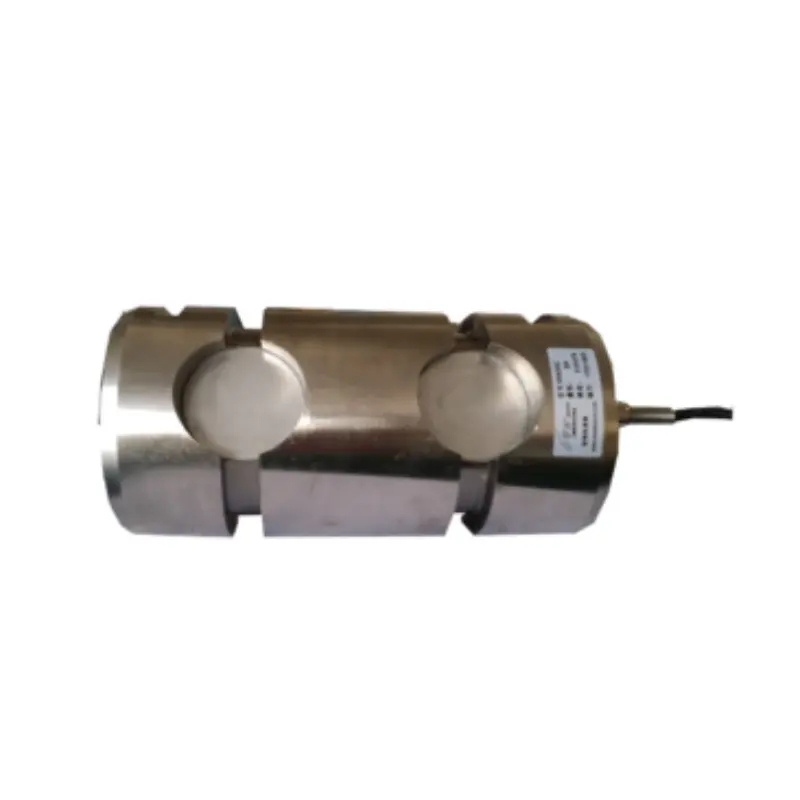
HG-P23F轴销传感器结构紧凑,几何外形简单,具有很强的抗扭转、抗弯曲能力,性能稳定可靠,安装方便;广泛用于港口、码头货物计量以及启闭机、起吊设备的安全检测,可选择内置式放大器4-20mA.
Overview
HG-P23F轴销传感器结构紧凑,几何外形简单,具有很强的抗扭转、抗弯曲能力,性能稳定可靠,安装方便;广泛用于港口、码头货物计量以及启闭机、起吊设备的安全检测,可选择内置式放大器4-20mA.
Features
Simple structure.
Strong anti-eccentric load capability.
High measurement accuracy, stable and reliable performance.
Dimensions (In mm. 1mm=0.03937 inches)
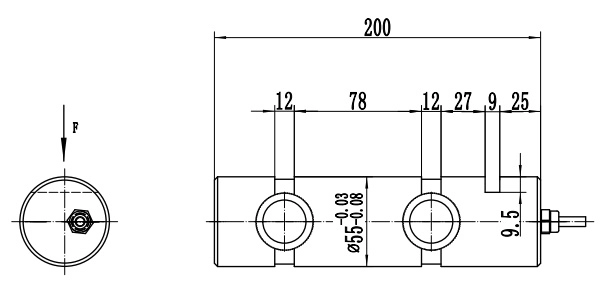
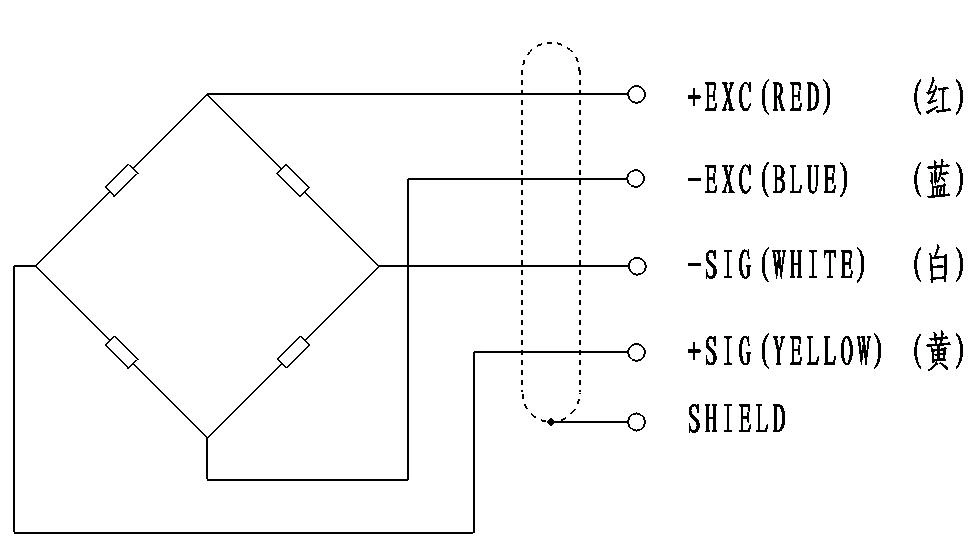
Circuit Diagram
| Red: | +input | red: | +Incentive |
| Blue: | -input | blue: | -excitation |
| White: | +output | White: | +Signal |
| Yellow: | -output | yellow: | -Signal |
Specification Technical parameters:
| Project Type | Technical parameters | |
| Measuring range Nominal load range | 0~15t | |
| Operating voltage Power supply | 10~12 VDC | |
| Current consumption Drawing current | <100 mA | |
| Dual signal output (Choose one of three) Double Independent redundant signal interface | Analog Output Analog output | 1.0±0.015mV/V |
| Analog Output Analog output | 4~20mA/24VDC | |
| Digital Bus CAN Bus | CAN open, CAN open Safety | |
| Comprehensive accuracy Class precision | 0.5%F.S | |
| Temperature drift Effect of temperature | 0.5%F.S/10℃ | |
| Operating temperature Operating temperature | -40~+85℃ | |
| Safety overload Safe Load Limit | 200% FS | |
| Plastic deformation limit Safety margin against yielding | 300% FS | |
| Body fracture limit Safety margin against breakage | 500% FS | |
| Material Material | High performance alloy steel or (chromium ratio greater than 15% stainless steel) High performance alloy steel or (chromium ratio>15% stainless steel) | |
| Protection level Protection type | IP67 (IEC60529) | |
| Climate testing Climate test | EN60068-2-30, DB55℃ | |
| Vibration-proof Vibration resistance | EN60068-2-6,5-500Hz,50g,10mm | |
| Shockproof Shock resistance | EN60068-2-27 (half sine) 50g,11ms,1000shocks; 1000g,1ms,50shocks | |
| coding | Range |
| 110123CWT15t | 15t |
Measuring principle
The pin sensor uses the elastic deformation of the elastomer under the action of external force to change the resistance value of the resistance strain gauge attached to its surface (increase or decrease), and then converts this resistance change into an electrical signal (voltage or current) through the corresponding measurement circuit, thereby completing the force measurement process.
product