



In the past, imported sensors were often the first choice for high-end force measurement in oilfields. However, after actual implementation, several practical pain points were frequently encountered: imported equipment was designed according to overseas laboratory conditions, and its adaptability to the windy, sandy, and temperature-varying environments of domestic oilfields was generally poor; non-standard modification cycles were long and the prices were high; when malfunctions occurred, after-sales response was slow, return-to-factory repair cycles were long, and well site downtime costs were very high. In recent years, domestic industrial sensing and oilfield measurement and control instruments have been rapidly iterating, and there are more and more cases of domestically produced supporting systems being implemented. The cooperation between Zhongke Huigan and Qingdao Beihai Junhui Electronic Instruments is a typical example.
Qingdao Beihai Junhui has been deeply involved in oilfield measurement and control instruments for many years, possessing mature multi-parameter instruments, monitoring platforms, and explosion-proof terminals. They are familiar with oilfield field regulations and safety requirements, but needed reliable domestically produced force sensors for underlying data acquisition. Zhongke Huigan focuses on load sensing, and its shaft pin and bearing housing sensors have undergone iterations in multiple industry projects, but they needed an instrumentation partner with expertise in oilfield conditions to implement the entire system. Through this collaboration, the sensor hardware, measurement and control instruments, and platform software were all domestically produced, eliminating reliance on overseas sensing components.
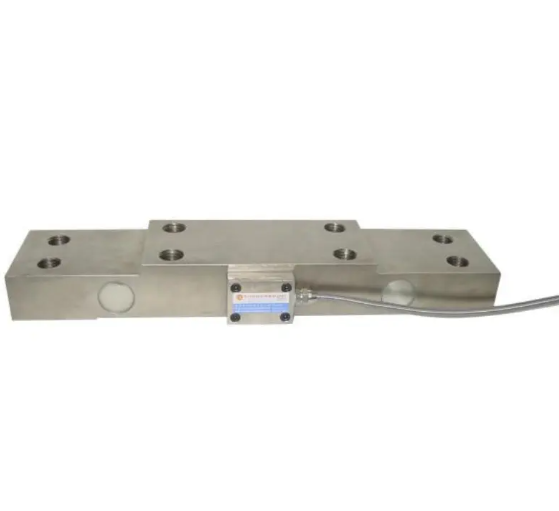
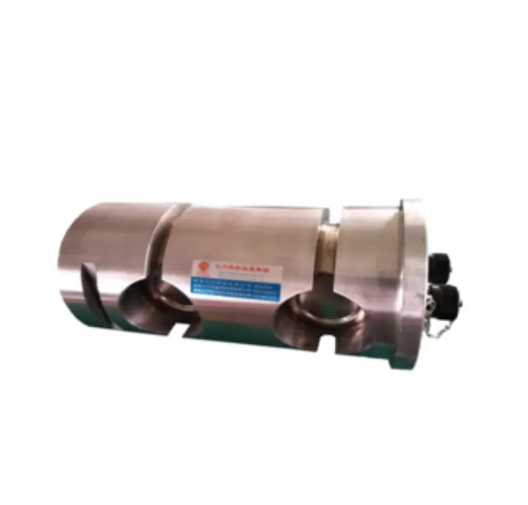
The project utilizes both the SM23C shaft pin sensor and the SM41A bearing housing sensor. Compared to imported products in the same price range, the SM23C boasts a comprehensive accuracy of ±0.05%FS, while most imported products achieve ±0.1%FS. Domestic products outperform imported ones in terms of temperature drift. The SM23C also features an IP67 protection rating, while many imported products are rated IP65, which offers insufficient protection in windy, sandy, and salty environments. The SM41A bearing housing sensor's shear structure resists off-center loading and is adapted to accommodate the deformation of older equipment bases, eliminating the need for a perfectly flat mounting surface. By 2026, Zhongke Huigan's full range of load sensors will have shipped a total of 3,200 units, with shaft pin and bearing housing products being deployed in batches in oil fields, ports, and mines. This large-scale production brings advantages in delivery and cost.
The difference in delivery and after-sales service was evident in the project. Some of the older equipment in the project had non-standard dimensions. Zhongke Huigan completed the customization of non-standard dimensions within 72 hours, while the lead time for imported similar products was often 30-45 days. On-site commissioning and troubleshooting were handled by the Junhui Oilfield field service team, with remote support from sensor technology, resulting in a much faster response time than imported equipment. The entire domestic solution reduced the overall procurement cost by approximately 40% compared to imported solutions with the same functionality.
In actual well site operation, the complete domestically produced solution completes multi-point load acquisition, measures pulley shear tension with the axle pin, and measures radial force on both sides of the roller with the bearing seat. The data is seamlessly integrated into Junhui's existing instrumentation system, enabling local display, audible and visual alarms, remote uploading, and historical data export, meeting the data traceability requirements for oilfield safety production monitoring and equipment annual inspection. From the field operation results, it can already replace imported force measurement solutions and adapt to the complex working conditions in domestic oilfields.
However, it must be objectively acknowledged that domestically produced sensors are not simply "low-price replacements." Their real advantage lies in a deeper understanding of domestic field conditions, optimizing processes, structures, and algorithms for older equipment and harsh outdoor environments, and collaborating deeply with local instrument manufacturers to integrate hardware, instruments, and platforms, rather than simply selling individual sensor hardware. The collaboration between Zhongke Huigan and Qingdao Beihai Junhui provides the industry with a valuable perspective: the intelligent upgrading of domestically produced equipment requires collaboration among sensor manufacturers, system integrators, and instrument manufacturers, continuously iterating based on real-world operating conditions, rather than simply benchmarking against specifications on paper.