



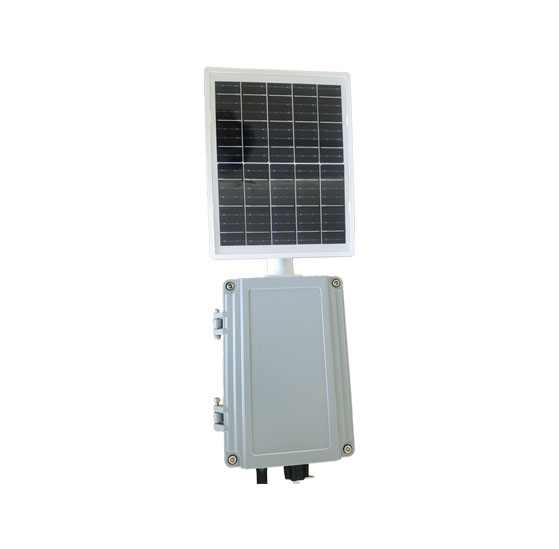
Wireless over-wind protection switch / Second-generation long-range wireless over-wind protection system
Product Categories Wireless anti-overwind switch
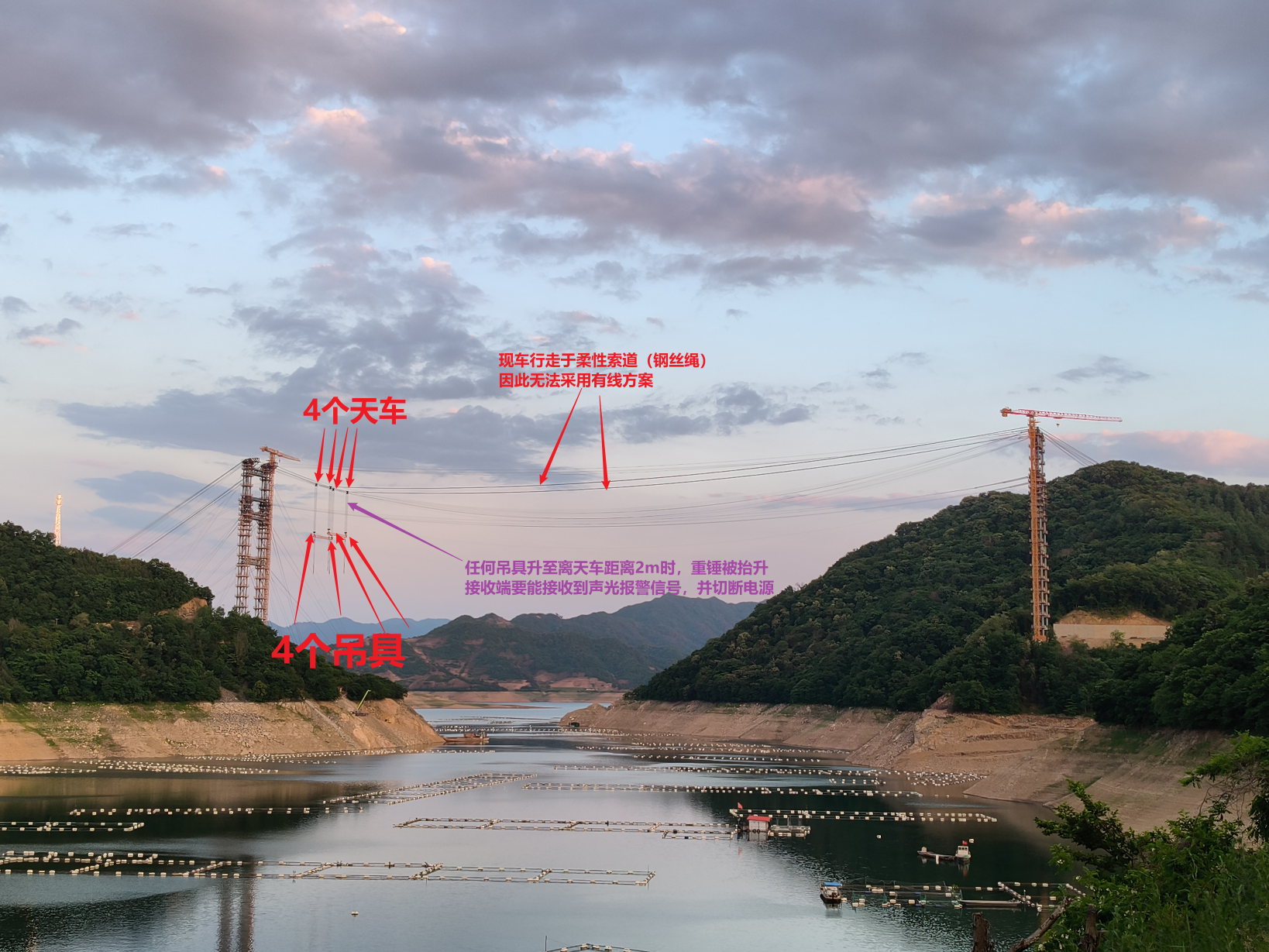
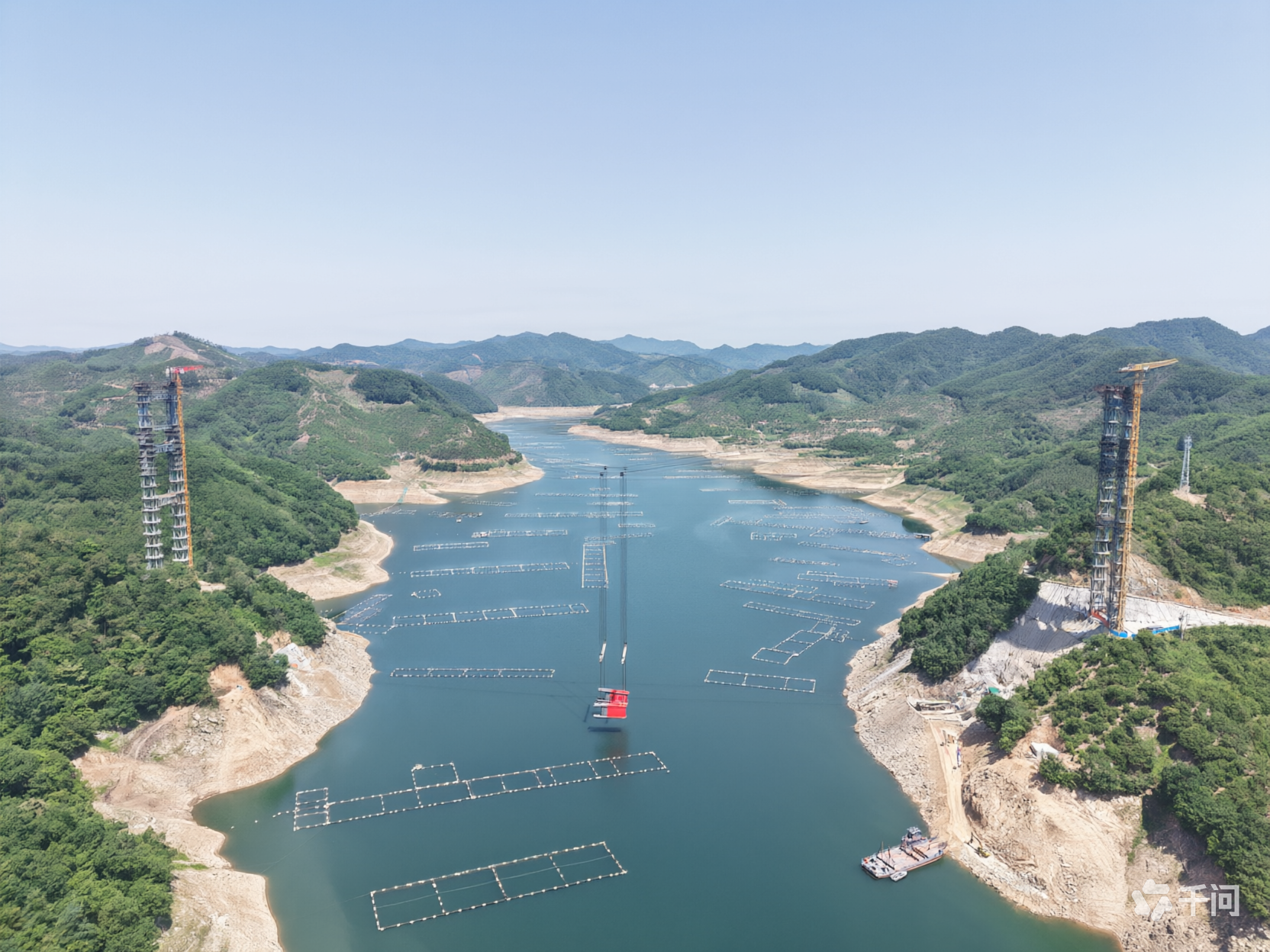
The product is mainly used for overwind control of cable cranes (cable hoists, cable cranes, cable machines, cableways, cable-type cranes). The equipment is widely used in complex scenarios such as the erection of long-span bridges, the hoisting of large components in mountainous areas, and the material transportation of water conservancy and hydropower projects. Cable cranes have large operating spans and dispersed high-altitude locations. Four overhead cranes move a long distance along the main cable, and four sets of lifting devices perform lifting operations simultaneously. Traditional wired limit protection solutions are extremely difficult to wire and have high maintenance costs at high altitudes. For a long time, there has been a lack of stable and reliable automated safety backup measures.
1. Project Background
The product is mainly used for overwind control of cable cranes (cable hoists, cable cranes, cable machines, cableways, cable-type cranes). The equipment is widely used in complex scenarios such as the erection of long-span bridges, the hoisting of large components in mountainous areas, and the material transportation of water conservancy and hydropower projects. Cable cranes have large operating spans and dispersed high-altitude locations. Four overhead cranes move a long distance along the main cable, and four sets of lifting devices perform lifting operations simultaneously. Traditional wired limit protection solutions are extremely difficult to wire and have high maintenance costs at high altitudes. For a long time, there has been a lack of stable and reliable automated safety backup measures.
2. Technical Pain Points
(1) In the existing operation system, it is impossible to detect in real time whether the four lifting devices are close to the limit lifting position of the four cranes. When the lifting devices reach the limit position, the operators do not stop lifting in time, which can easily lead to major quality and safety accidents such as wire rope breakage, lifting device overshooting, and main cable structure deformation.
(2) The location of the high-altitude mobile crane has no stable external power supply. Conventional wired power supply schemes are complicated to install and suffer severe wear and tear from dragging, making them unable to operate stably for a long time in high-altitude mobile scenarios.
(3) The distance between the overhead crane and the ground control terminal is relatively long. Conventional short-range wireless communication methods have weak diffraction capabilities and poor anti-interference performance, which cannot meet the reliable transmission requirements of more than 1,000 meters. Communication interruption is likely to occur in scenarios with signal obstruction and strong electromagnetic interference.
(4) The original safety protection relied entirely on manual visual judgment, which was greatly affected by factors such as the on-site working environment, the state of personnel's attention, and fatigue from long-term work, and lacked an automated and traceable safety protection mechanism.
3. Technical Objectives
A wireless overwind prevention system for cable cranes, based on long-range wireless communication technology, is deployed to achieve real-time detection of the lifting limit positions of four overhead cranes, stable long-distance transmission, visual monitoring of heartbeat status, overwind audible and visual alarms, and hard interlocking cutoff of the control circuit. One receiver is configured at the receiving end, enabling a four-transmitter-one-receiver mode. This system fundamentally eliminates safety accidents caused by overwind operations, comprehensively improving the inherent safety level of cable crane operations.
4. Overall System Technical Solution and Working Logic
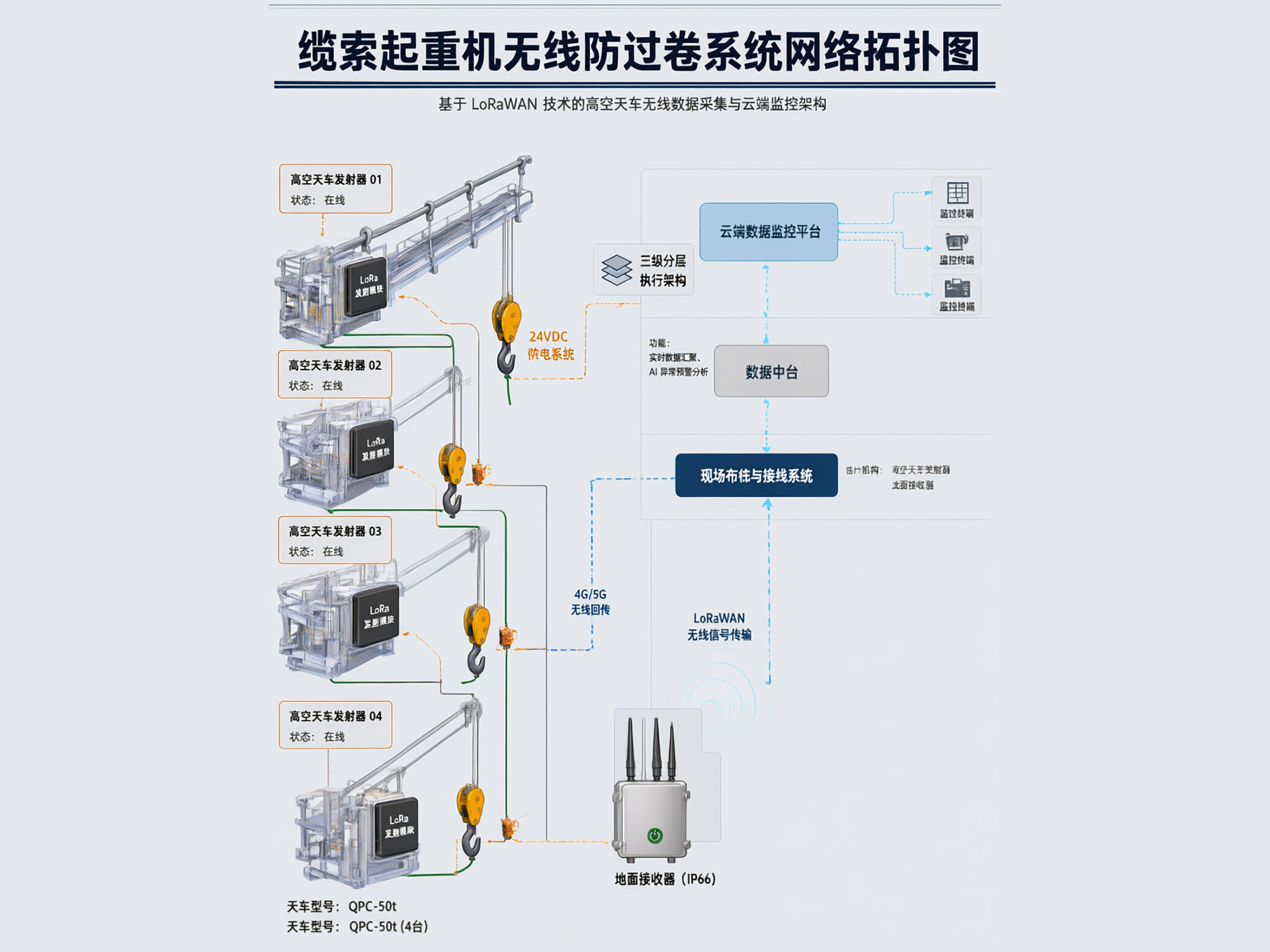
This system adopts a complete technical architecture of "front-end distributed acquisition + long-distance wireless transmission + three-level hierarchical execution". It consists of a high-altitude wireless anti-overwind switch transmitter, a ground wireless anti-overwind receiver and a complete set of supporting installation materials. It is developed based on industrial sensing and Internet of Things technology system and is fully adapted to the special working conditions of cable cranes with large span, high altitude, strong vibration and strong electromagnetic interference.
5 System Overall Architecture
(1) Front-end acquisition layer: Install one wireless anti-overwind switch transmitter on each side of the overhead crane to monitor the lifting position of the lifting device and the operating status of the equipment in real time, send heartbeat signals to the ground end at fixed intervals, and immediately upload alarm signals when overwind action is triggered.
(2) Wireless transmission layer: The entire process adopts wireless spread spectrum communication technology, and is equipped with an outdoor 5dBi medium-high gain omnidirectional antenna to ensure stable data transmission with low latency and high anti-interference at a distance of 1000 meters and above.
(3) Control execution layer: A wireless anti-overwind receiver is installed at the ground control terminal. After receiving the signal, it synchronously completes three-level output response, which corresponds to heartbeat status indication, overwind sound alarm and control loop hard interlock cut-off, forming a three-layer progressive safety protection system.
Related Products
-

Wireless overwind protection switch HG40-WK01