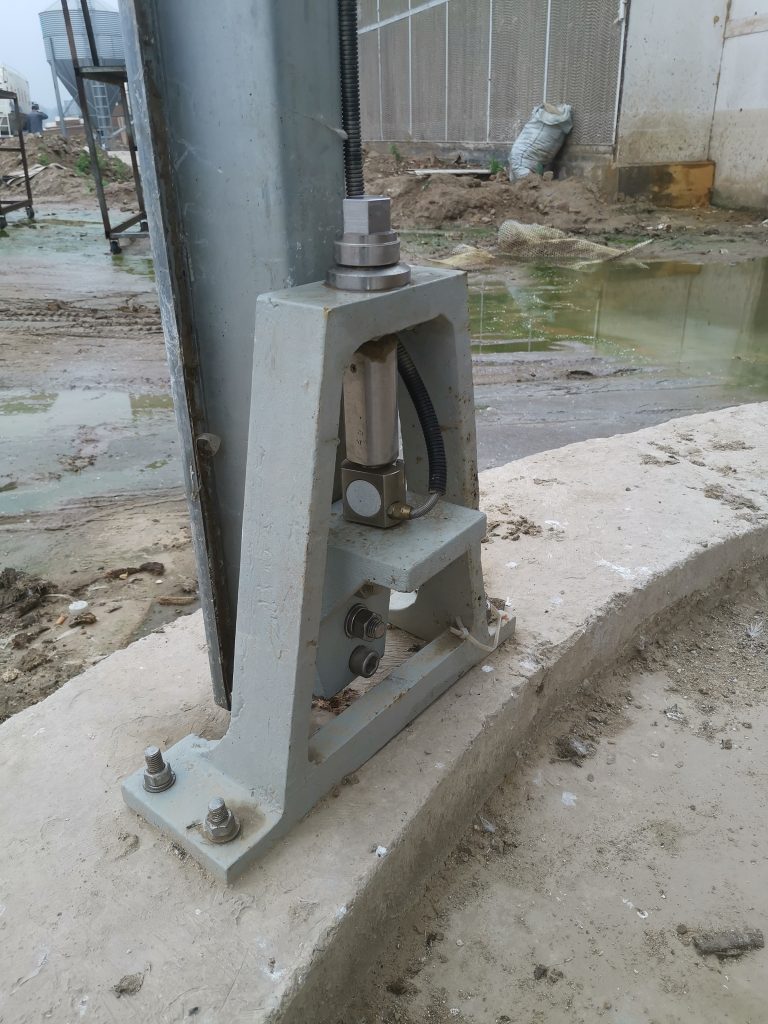



The market for feed tower weighing equipment is growing rapidly, with a wide variety of brands, models, and prices. Many farmers are easily misled by complicated parameters and low prices when making their first purchase, ending up with equipment that is unsuitable for their site and has poor stability. This leads to frequent problems later on, ultimately increasing costs.
Based on years of front-line application experience, and setting aside marketing rhetoric, I will objectively share some key points for selecting material tower weighing equipment to help you avoid common pitfalls.
First, prioritize actual accuracy and stability, not just the specifications on paper. Almost all vendors will list high-precision parameters, but paper data does not equal real-world performance. Livestock farms are subject to vibration, wind pressure, and temperature fluctuations. While ordinary equipment may meet static accuracy standards, once put into use, the data will frequently fluctuate and drift.
When purchasing equipment, it's crucial to understand its anti-interference capabilities: does it have dedicated filtering and temperature compensation algorithms, and can it withstand the effects of fan vibration and outdoor wind? If possible, request to observe real-world usage cases under similar conditions and check the stability of readings after prolonged operation. This is more valuable than simply looking at specifications.
Second, confirm the equipment's installation compatibility and prioritize solutions that do not require modification. As mentioned earlier, modifying the main body of the feed tower not only delays production but also poses safety hazards. Prioritize equipment with added legs that do not require modification of the tower body, and confirm whether the product is compatible with the number of legs, spacing, and tower specifications of your feed tower. Some niche brands have equipment with limited interfaces and structures, only compatible with specific tower types, which restricts future replacements and expansions.
Third, prioritize hardware protection levels that match the operating conditions of the farm. Farms face significant challenges due to dust, moisture, and corrosion; the protection level of the equipment's casing and internal modules directly determines its lifespan. Choose products with high levels of complete sealing, dustproofing, and waterproofing. Prioritize corrosion-resistant and wear-resistant industrial materials for the casing; avoid opting for cheap equipment with ordinary plastic or simple casings. Such equipment may work for a short time, but after six months to a year, it will likely experience water ingress, dust accumulation, and electrical malfunctions.
Fourth, examine the data transmission and backend functions to ensure they meet your management needs. For single, small-scale material towers, basic local display and data recording functions are sufficient; for multi-tower parks or large-scale sites, it is essential to confirm that the equipment supports IoT remote transmission, centralized monitoring, and mobile app viewing.
Also, pay attention to data storage capabilities. Reputable equipment can retain historical records for a long time, facilitating later reconciliation and loss analysis. Be wary of some low-priced products, as the data can only be viewed in real time and cannot be stored and traced, thus defeating the core purpose of intelligent management.
Fifth, understand their after-sales and localized service capabilities. Weighing tower equipment is industrial equipment that operates for extended periods, requiring ongoing debugging, maintenance, and parts replacement. Prioritize brands with local service teams and comprehensive after-sales systems. This ensures rapid on-site support in case of equipment malfunction, minimizing downtime. Some low-priced online products only sell the equipment itself, lacking offline service. In remote areas, malfunctions can result in extremely long repair cycles, severely impacting production.
Finally, a reminder: you get what you pay for. Weighing tower equipment isn't a disposable item; it's a fundamental management tool to be used for several years. Overly pursuing the lowest price will likely result in buying a stripped-down, low-spec version of the equipment. The overall cost of subsequent maintenance and replacements will far exceed the initial price difference of purchasing a high-quality product.
By comprehensively considering the size of your site, the number of material towers, and the on-site working conditions, and taking into account accuracy, stability, adaptability, and after-sales service, you can select the equipment that is truly suitable for you.