



In the livestock farming industry, a saying is gaining increasing acceptance: whether farming is profitable or not depends on how strictly feed is managed. Feed costs generally account for more than 70% of the total cost of farming. As the core facility for feed storage, the accuracy of feed tower measurement and the clarity of inventory directly determine whether costs can be controlled, losses can be monitored, and profits can be calculated clearly.
Today, we won't talk about concepts or slogans. Instead, we'll start from real-world scenarios and objectively discuss the feed tower weighing system that's becoming increasingly common in large-scale farms—what problems it solves, what its principles are, how well it performs in practice, and what kind of farms it's suitable for.
I. What are the difficulties in traditional material tower management?
Many farms rely on guesswork, climbing, and guessing to manage their feed towers.
Manually climbing towers to inspect materials: The towers are high, windy, exposed to the sun and rain, not only tiring but also fraught with the risks of working at height; young people are unwilling to do it, and the elderly are unable to do it, resulting in increasingly high labor costs.
The weight estimation of the feed level gauge is calculated by converting height to density. However, the data will be greatly deviated when the feed gets damp, clumps together, or the stacking angle changes. Furthermore, the data often fluctuates wildly due to fan vibrations, wind, and sun exposure, making it unreliable as an accurate reading.
The records of incoming and outgoing materials are often unclear: handwritten ledgers are prone to errors, omissions, and forgetfulness; at the end of the month, when reconciling accounts, the incoming materials, consumption, and inventory do not match, and it is impossible to find out where the losses are or how much wasted.
Supplementing feed relies entirely on experience: if you're afraid of running out of feed, you stock up on more, tying up capital; if you're afraid of stockpiling too much feed, you stock up on less, which can easily lead to supply disruptions and affect the feeding rhythm.
To put it bluntly, the traditional approach treats the material tower like a "blind box," relying mainly on intuition to determine how much is inside, how much is used, and how much is wasted. Over the long term, the hidden losses are considerable.
II. How exactly does the weighing system of the material tower work?
The material tower weighing system is not some complicated black technology; its essence is to turn "estimation" into "direct weighing," which is simple, direct, and pragmatic.
Taking the commonly used Zhongke Huigan SM40-LT system as an example:
A high-precision weighing module (sensor + support base) is installed under each leg of the pylon.
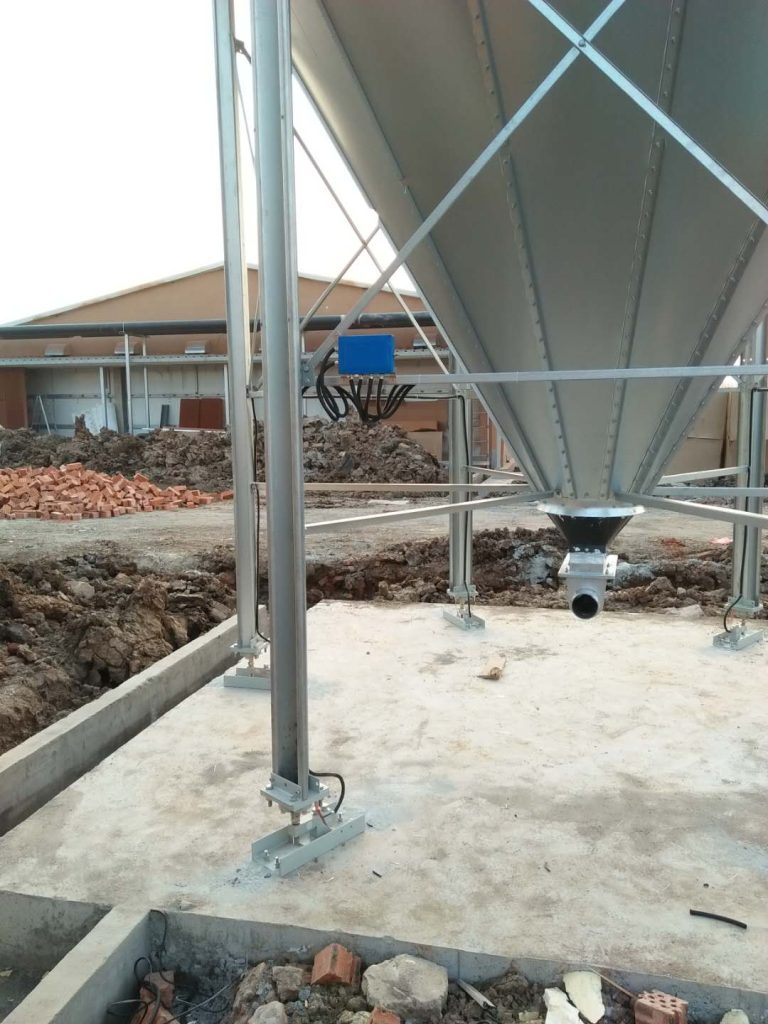
The entire weight of the feed tower and the feed is pressed vertically onto the sensor, which converts the force into an electrical signal.
The instrument collects signals, filters and processes them to directly calculate the real-time total weight, rather than estimating it based on height.
Data is automatically recorded, stored, and uploaded; it can be viewed locally or remotely, and can be accessed on mobile phones and computers.
Key features:
With an overall accuracy of ≤0.1% FS, the error per ton of feed does not exceed 1 kg, which is sufficient for calculating breeding costs.
With IP68 protection, the sensor is dustproof, moisture-proof, and waterproof, and can withstand outdoor exposure to sun, rain, and dust accumulation.
Dynamic filtering + zero-point tracking are specifically designed to handle fan vibration, wind, and vehicle disturbances, ensuring stable data without random fluctuations.
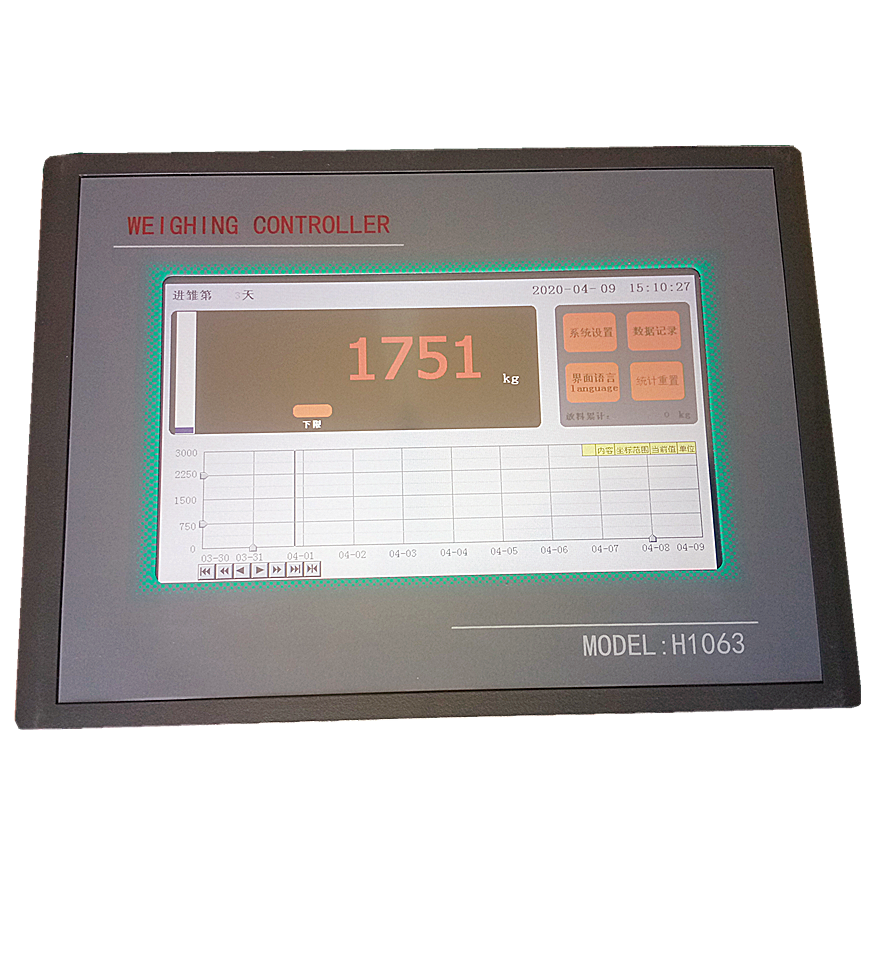
In short: direct weighing, strong anti-interference, stable data, and simple installation.
III. In actual use, what problems can it actually solve?
1. Transparent inventory, no more guesswork.
The feed weight inside the feed tower is displayed in real time, showing exactly how much is left and how much has been used. No need to climb the tower or estimate; administrators can view the data remotely, and multiple towers and multiple sites can be managed uniformly.
2. Losses are traceable, preventing hidden waste.
Each time materials are fed in or discharged, the system automatically records the time and weight, creating a complete ledger. At the end of the month, the system can clearly record the amount of materials fed in, consumed, and in stock. It can also trace where the losses occurred and when the material consumption was abnormal, preventing the loss of profits due to confusion.
3. Material replenishment is planned to avoid material shortages and buildup.
Low inventory alerts can be set, and automatic reminders will be given when the remaining quantity is insufficient. Purchases can be placed on demand, so that production is not affected by material shortages, and capital is not tied up by excessive stockpiling, resulting in healthier inventory turnover.
4. The foundation of precision feeding; formula design is not in vain.
Many farms now practice precision feeding, with the daily feed amount per pen following the prescribed formula. If the feed tower's weighing is inaccurate, the feed amount will also be inaccurate, significantly reducing the effectiveness of the formula. Accurate weighing is a prerequisite for precision feeding.
5. Simple installation, even old tower armor models can be modified.
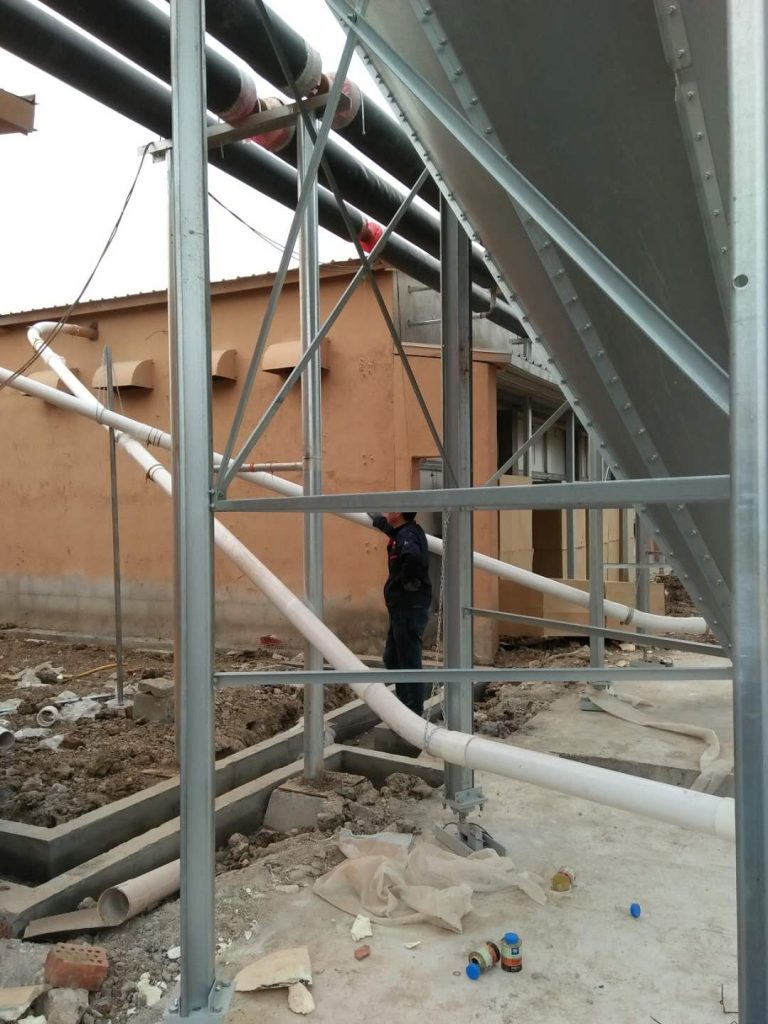
No welding, drilling, or tower dismantling is required; simply place the module under the support legs and secure it. The construction period is short, it doesn't disrupt normal feeding operations, and it's suitable for both new and old towers.
IV. What kind of farms are suitable for this?
Objectively speaking, the material tower weighing system is not a "panacea," but its value is very obvious for the following types of sites:
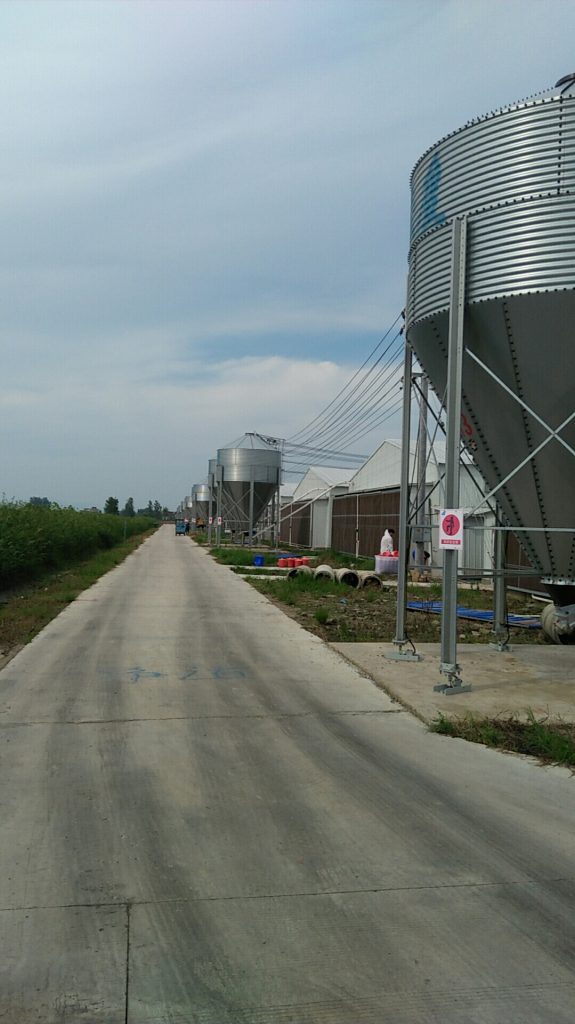
Large-scale pig farms, cattle farms, and chicken farms (over 500 sows, over 10,000 fattening pigs, and large-scale chicken farms).
Livestock enterprises with multiple feed towers, multiple farms, and large management radius
A refined management approach that emphasizes cost accounting and aims to reduce losses.
Farms currently undergoing precision feeding and intelligent farming upgrades
For small-scale operators with only one or two small material towers and relying entirely on extensive manual management, the need for material tower weighing may not be urgent in the short term. However, if one wants to expand the scale and refine the management, material tower weighing is an essential step that cannot be avoided.
V. Objective Summary: It's not just a "showpiece," it's a practical tool.
The feed tower weighing system is essentially a fundamental tool for **shifting feed management from "experience-driven" to "data-driven".** It doesn't directly help you raise more pigs or produce more eggs, but it can help you:
Reduce manpower and lower safety risks
Accurate data and clear cost calculations
Controllable losses and prevention of hidden waste
Transparent management and decision-making based on evidence
In today's increasingly competitive and profit-driven farming environment, meticulous management is not an option, but a matter of survival. Accurately calculating feed costs is the first step in meticulous management.