



If you've ever been involved in valve testing, you're probably well aware of one fact: determining the exact torque is never a simple matter.
What is valve torque? Simply put, it's the torque required to open and close a valve. But behind this simple definition lie many variables—different valve types, different pipe diameters, different sealing structures, and even the same batch of valves can feel different when turned under different temperature conditions. If the torque is too low, the valve may not close tightly, leading to media leakage; if the torque is too high, the actuator may not be able to operate it, or it may seize up after a short time. The problem is, what is the appropriate torque value? Traditional testing methods cannot provide a completely reassuring answer.
The old methods, to put it bluntly, relied on manual manipulation, visual inspection, and handwriting. Even slight variations in the operator's force, speed, or reading habits would cause the measured data to fluctuate. Slight changes in temperature and humidity would also alter the results. Frankly, no one could say for sure whether the differences between batches were due to genuine product issues or accidental fluctuations during testing.
More importantly, torque is never an isolated variable. When a valve operates under actual conditions, pressure changes are directly reflected in its torque performance, and flow fluctuations also affect the stress on the valve stem. If only torque is measured, the data obtained is like seeing only a small piece of a puzzle in a complete picture, and it is impossible to reconstruct the valve's true operating state.
This is why, when Anhui Zhongke Huineng Company developed this valve torque comprehensive testing system, many technical personnel in the industry reacted with: "This approach is on the right track."
Multi-parameter synchronization is what testing should look like.
The core logic of Zhongke Huigan's system can be summarized in one sentence: measure the valve under the conditions it is supposed to be in.
The reason why traditional testing results in fragmented data is that each parameter is measured using a separate device. Torque is measured on one device, pressure on another, and flow rate on yet another. The resulting data is like reports written in different languages, which don't match up when put together. However, Zhongke Huigan's valve torque integrated testing system was designed from the outset to perform simultaneous multi-parameter measurement—it can test multiple parameters such as torque, pressure, and flow rate at the same time.
The logic is simple. When a valve operates in a pipeline, torque, pressure, and flow rate are interconnected. Increased pressure alters the force-bearing surface of the valve plate, naturally increasing torque; changes in flow rate alter the impact force of the medium on the valve stem, causing torque fluctuations. If these parameters are measured separately, the data obtained will be fragmented and incompatible depending on the time, operating conditions, and equipment used.
Synchronous measurement solves this problem precisely—all data is collected in the same test under the same operating conditions, and each torque data point corresponds to the pressure and flow rate values at that time. In this way, technicians no longer see a bunch of isolated numbers, but a complete picture of the valve's operation. How the valve's torque changes under different pressure differentials and in which flow range it performs best are all clearly visible.
This multi-parameter fusion testing approach is particularly useful in industries such as petrochemicals and power generation. The large number and diverse types of valves in these industries place high demands on testing efficiency and data quality. With this system, all parameters of valves in the same batch can be measured at once, naturally ensuring the correlation between the data. This eliminates the need for repeated troubleshooting to determine whether the problem lies with the valve or the testing method.
Sensor accuracy is both our strength and our bottom line.
Of course, having the right approach isn't enough; the hardware also needs to be up to par.
The biggest concern in valve torque testing is sensor instability. If the torque sensor's accuracy is not stable enough, the measured data will vary from day to day, rendering the entire test meaningless. Experienced people in the industry know that the quality of the sensor directly determines whether a set of data can be considered "valid data."
Zhongke Huigan has accumulated expertise in the sensor field. This company provides sensing solutions for heavy machinery and energy networks, and has developed a systematic technological capability in areas such as pressure measurement and force monitoring. The sensor technology applied to the valve torque testing system relies precisely on this accumulated expertise.
The sensors used in this system have undergone significant improvements in stability, resulting in highly consistent torque data output. When repeatedly testing the same batch of valves, data fluctuations were kept within a small range, demonstrating commendable repeatability. This is particularly valuable for scenarios requiring batch testing—if each measurement yields different data, the quality department cannot draw conclusions, while stable and reliable data output is a prerequisite for making informed decisions.
Lower the operational threshold and make things clear.
Another easily overlooked issue is the user experience.
Some testing equipment is packed with features, but the user interface is so complex it's like flying an airplane; technicians need several days to learn the basic setup process. This is a considerable burden in a factory with a fast production pace and frequent staff turnover.
Zhongke Huineng has made significant optimizations to this system. The user interface is quite intuitive, and ordinary technicians can complete the setup by following the instructions, without requiring particularly specialized training. This design philosophy is actually very pragmatic—the value of the equipment lies not in its complexity, but in how many people can actually use it. A system that requires a PhD to operate is just a decoration in a factory workshop.
Meanwhile, routine maintenance is not complicated. These types of testing equipment are used frequently and under diverse operating conditions; if they require constant calibration or malfunction every few days, even the best technical parameters are useless. Zhongke Huigan's system is designed with long-term stability in mind, minimizing the tedious procedures of routine maintenance.
Automatic data recording: The endpoint of the test is not the reading on the dial.
Many testing devices are limited to the "testing" step—a few numbers appear on the screen, the operator glances at them, writes them down, and the task is considered complete. But the real testing work goes far beyond that. Data recording, processing, analysis, and report generation often take up more time than the testing itself.
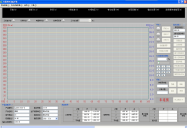
Zhongke Huigan's system has built-in data storage and analysis functions. All data during the testing process is automatically recorded and saved, and can be directly exported after the test to generate a complete test record.
Don't underestimate this function. Anyone who has done valve testing knows how tedious it is to manually organize data. Dozens or even hundreds of data points, transcribed, compared, and tabulated one by one—one slip and you've copied a single digit wrong, which is impossible to find later when you're trying to trace it back. Automated recording and export skips this entire manual process—once the test is done, it's done; the data is already neatly stored away.
This is especially important in situations requiring formal reports. Factory inspections require reports, incoming goods inspections require reports, and post-repair retests require reports. Previously, these reports were all compiled manually, taking at least half a day to complete. Now, the report is generated as soon as the test is finished, saving time that can be used for more valuable analysis and judgment, rather than sitting in front of a computer typing spreadsheets.
From "relying on intuition" to "data-driven decision-making"
If we look at this issue on a larger scale, it is actually a main theme of industry development.
The field of valve testing has long faced an awkward situation—it's not that people don't want to make the tests accurate, but rather that traditional methods have too many limitations. The equipment is complex, the operation cumbersome, the data is difficult to trace, and the efficiency is low. Many valve manufacturers and users have been making do in a state of "being able to test, but not being able to test effectively."
But things are different now. The advancement of intelligent manufacturing and industrial automation is raising the standards in this field. The efficiency and quality of factory inspections directly affect brand reputation, the standardization of incoming inspections impacts production safety, and condition assessments during maintenance are the first line of defense against accidents. All these aspects place higher demands on testing equipment.
Zhongke Huigan's valve torque comprehensive testing system does a very simple thing—it accurately measures multiple parameters simultaneously, lowers the operational threshold, and automatically manages the data, freeing technicians from tedious manual labor so they can focus their energy on things that truly require professional judgment.
To put it simply, whether a testing device is truly "useful" isn't determined by how thick its parameter table is, but by whether frontline engineers are willing to use it and whether it can genuinely solve problems after use. This system is already in practical application in industries such as petrochemicals, power, and water conservancy, and has accumulated numerous user case studies.
We often hear the saying: valves are the "throat" of a pipeline, and torque is the "pulse" of a valve. Zhongke Huigan's system is like equipping this pulse with an intelligent monitoring device, transforming those invisible, intangible, and indescribable stress states into a series of clear and traceable data.
Where the data is, the judgment is; where the judgment is, the security is.