



After so many years of valve testing, I finally understand what "inaccuracy" means.
When I first started out, I thought testing was just "connecting the equipment, pressing start, and taking readings." After so many years, I've realized that testing is far more complex than it seems.
Sometimes, the same valve produces different data when measured in the morning and afternoon. Sometimes, different operators produce different data. When customers ask, is it a problem with the equipment or the operator? It's hard to say.
Later I gradually understood that this is called "inaccuracy," which is not due to inaccurate equipment, but rather the difference caused by inconsistent testing conditions.
What does "uncertainty" mean?
For example, a batch of soft-seal ball valves had a torque of 950 N·m measured in the morning, but it was changed to 890 N·m in the afternoon. That's a difference of 60 N·m, almost 71 TP3T. Upon seeing this data, the customer's first reaction was, "There's something wrong with your equipment."
However, after investigation, it was found that the equipment was not faulty. The reason was simple—the workshop air conditioning was on in the morning, and the temperature was 22 degrees Celsius; in the afternoon, the air conditioning was turned off, and the temperature rose to 28 degrees Celsius. PTFE seals are sensitive to temperature; when the temperature is high, the material softens, friction decreases, and the torque naturally decreases.
This is called "uncertainty principle". It's not that the equipment is inaccurate, but that the testing conditions have changed.
What other factors can lead to "inaccuracy in measurement"?
Test speed also affects the results. Faster rotation results in greater dynamic effects and higher torque; slower rotation results in lower torque. If the test speed is different each time, the data will not be comparable.
The initial condition of the valve is also important. If a valve has been sitting untouched in the warehouse for a week, the grease will solidify, resulting in a higher torque on the first measurement. After several passes, the grease will be evenly distributed, and the torque will decrease. The data from the first and second measurements will then differ.
There's also the medium pressure. The torque difference between pressurized and unpressurized conditions can exceed 301TP/3T. Data measured under unpressurized conditions will definitely be inaccurate when used in a pressurized environment.
How to solve the problem of "inaccurate measurement"?
My experience is: fix the test conditions and write them in the operating procedures.
What temperature range should be maintained? What testing speed should be used? Should the valves be moved before testing? How many times should they be moved? Is there pressure? What is the pressure? Decide on all these details, and perform each test under the same conditions.
Then write these conditions in the test report. When the client sees the report, they will know under what conditions the data was measured and will not question your data.
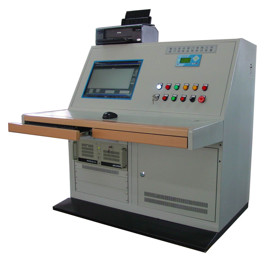
One advantage of the SM200 system is that test parameters can be set in the software and saved as a configuration file. Each test uses the same configuration file, ensuring that the test speed, sampling frequency, and decision thresholds remain consistent and unaffected by different operators.
A few thoughts
The problem of "inaccurate measurements" is not actually a problem with the equipment, but a problem with management. Standardizing and regulating the testing conditions will naturally lead to more accurate data.
In the testing industry, you can't just focus on equipment precision. No matter how high the equipment precision, inconsistent testing conditions will still result in inaccurate data. Managing the process well is more effective than buying more expensive equipment.