


Let me ask you a question first: If you can't turn the faucet on your home or turn it off properly, don't you find it annoying? Actually, in industry, those huge valves are the same. However, if they can't be turned on or closed properly, the consequences are not just a simple leak; they could leak high-pressure steam, toxic chemicals, or even cause a major accident.
So how do you determine if a valve is working well? Engineers have a simple and direct method – measuring the torque.
What is torque?
Torque, simply put, is the "force of rotation." The feeling of applying force with your hand when you twist a bottle cap is torque. For a valve, the force required to move from closed to open, overcoming friction on the sealing surface, pressure of the medium, etc., is called "opening torque"; conversely, the force required to move from open to closed is called "closing torque."
If the torque is too high, the motor driving the valve may burn out, or the manual rotary wheel may be too heavy to move; if the torque is too low, the valve may not close tightly, resulting in leakage. Therefore, the torque value is a core indicator for evaluating valve quality.
How was torque measured in the past?
In many factories, experienced workers still rely on "feel" to estimate torque. They take a graduated manual wrench (torque wrench), turn the valve while looking at the dial, and note the number where the pointer swings the most. This process has several inherent flaws:
Relying on experience is unreliable: different workers have different strengths and read the meter at different angles, which can result in a difference of 20%.
Looking only at the highest peak: The torque changes throughout the entire rotation process are like an electrocardiogram, but the old method only records the highest value, and has no idea whether there is any jamming or abnormal fluctuation in the middle.
Slow as a snail: testing a valve requires repeated clamping and tightening several times, and you can only test a few in a day.
Data cannot be preserved: Paper notes become blurred over time, making it almost impossible to trace them back to their source.
How can modern technology solve this?
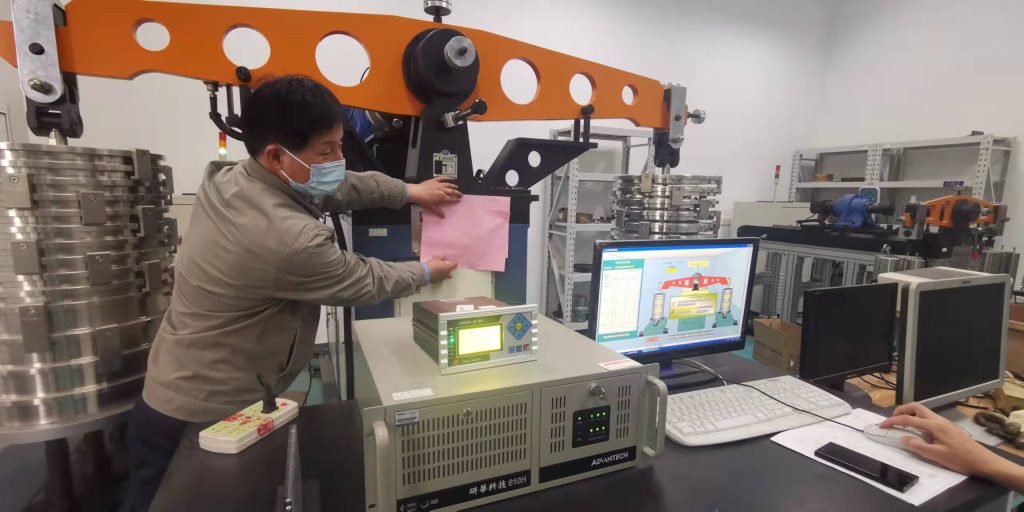
Currently, many professional laboratories and manufacturing plants are using comprehensive valve torque testing systems. This system consists of three parts:
High-precision sensor: Like an electronic scale, it senses the force when the valve rotates in real time.
Automatic drive device: Replaces manual labor by using a motor to stably rotate the valve.
Computer software: Transforms the data from the sensors into a torque-angle curve and automatically stores all results.
During testing, simply fix the valve on the test bench, plug in the sensor, and click "Start" on the computer. The system will then automatically open and close the valve once, simultaneously drawing a smooth curve on the screen. The entire process takes only a few minutes.
What are the advantages of the new method?
Accurate: Machine-measured, with no human error. The curves of the same valve measured ten times almost overlap.
In short: the curve is like an electrocardiogram of valves. A sudden spike indicates a potential glitch; large fluctuations indicate potential impurities. This information is far more valuable than a single number.
Fast: One test takes only a few minutes, and hundreds of tests can be done in a day with ease.
Traceability: All data is stored in the computer. You can find out the date, batch, and model of the valve with a click of the mouse, and the report is generated instantly.
Do all valves need to be tested in this way?
Not necessarily. If you only occasionally need to repair a few small valves on your own farm, a manual wrench will suffice. However, if you are a valve manufacturer that ships hundreds of units every day, or if you are purchasing a batch of critical valves for petrochemical, nuclear power, or natural gas pipelines, then you must require the manufacturer to provide complete torque-angle curves, rather than just looking at a report that says "qualified".
Because a qualified maximum torque value cannot mask the fatal glitch and fluctuation in the curve.
Summarize
Valve torque testing is essentially giving a valve a "strength checkup." From relying on feel and recording numbers to analyzing curves and storing data, technological advancements allow us to more accurately assess valve quality. Next time you see a valve, consider this: Is it difficult to turn? How exactly does that force change? The answer lies hidden in a small curve.